

Fifty-two years ago tonight The Flood was not yet a year old when Dave Peyton, Charlie Bowen and Bill Hoke settled down in front of their reel-to-reel tape recorder and played this old tune:
Having learned the above song from a 1935 Carter Family recording, Dave and Bill taught it to Charlie just before pushing the “Record” button that night. All Bowen had to do was follow along on his guitar and stay out of the way of Dave’s vocals and Bill’s lovely dobro playing.
How Bill Came to the Dobro
As reported earlier, Charlie bought a beautiful National Steel Body guitar a year or so before this October 1974 evening. Bowen had visions of a future in blues, but quickly figured out his new instrument was much more guitar than he could handle.
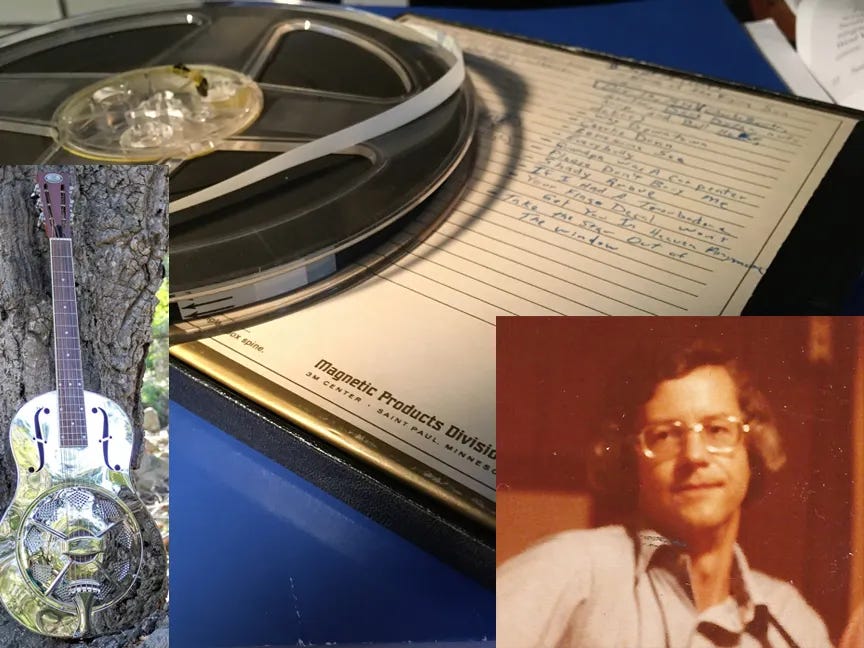
Enter Bill Hoke, who borrowed the box and added an extension nut to raise the strings so he could help the new instrument get in touch with its dobro nature.
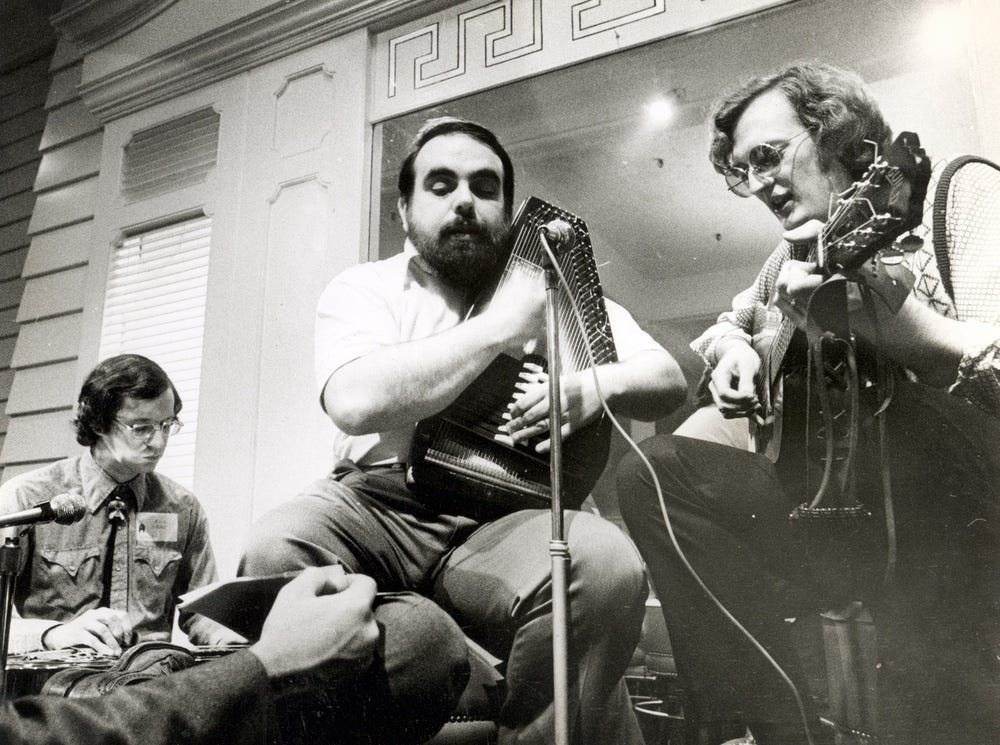
As we’ve said in an earlier article, Bill was best known for the part he played in The Kentucky Foothill Ramblers string band. That was banjoist H. David Holbrook’s extraordinary old-time string band of the early 1970s that played such an important part in those wonderful Bowen Bash music parties.
And when he wasn’t busy with KFR business, Bill could be found slumming and strumming with Peyton and Bowen to help give birth to The Flood.
About the Song
Now, about “Merry Golden Tree.” As singer/songwriter Roseanne Cash wrote earlier this year in Rolling Stone magazine, “this 400-year-old folk song about a drowned cabin boy came with immigrants from the British Isles to the New World, evolved, and was passed down by oral tradition in Appalachia.”
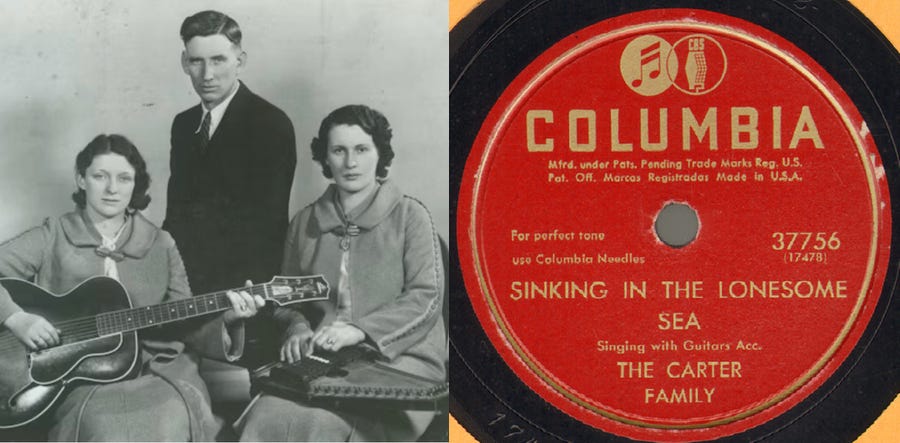
Settling in Virginia’s Poor Valley, it was recorded by The Carter Family as “Sinking in the Lonesome Sea.” It traveled again, through the South and then north, to the Great Lakes.

In 1949, Viper, Ky., singer Jean Ritchie recorded it with Alan Lomax, under the title “The Merry Golden Tree.” A decade later, Lomax captured a field recording of a woman named Almeda Riddle singing an a cappella version at her home in Cleburne County, Ark.

“Merry Golden Tree” began in the 17th century as “The Sweet Trinity,” and was variously identified over the centuries as “The Golden Vanity” and “The Golden Willow Tree.”
It tells the story of cabin boy who tells his captain he can save their ship by swimming to a threatening enemy ship and drilling holes in its hull. The captain promises that if he is successful he’ll be rewarded with money and his daughter’s hand in marriage. But after the enemy ship sinks, the captain reneges on the deal and leaves the cabin boy to drown.

“The verses altered a bit over time, and the melody moved a note or two,” Cash wrote in Rolling Stone. “There are perhaps a hundred different versions, but the story and haunting melody remained the same: The captain always betrays the cabin boy, and the boy is always left to drown.”

By the mid-20th century, the song “had jumped the musical tracks,” Cash added, “marrying two traditions essential to the American songbook: In 1952, Aaron Copland recorded a version in his Old American Songs, Set II. He modified the melody a bit, but the unsettling feeling is intact.”
Fire Up the Time Machine
Meanwhile, back in the Floodiverse, if all this have you in the mood for more of Dave Peyton’s tunes, drop by the Radio Floodango music streaming service — it’s all free! — and click into the David Channel.

There you’ll find dozens of Dave’s tunes from over the decades in a randomized playlist.
And remember, we’ve now got ways to mobilize the ol’ Floodanago. Click here to find out how to put our radio on your computer desktop and on an iPhone to make your Flood fix always just a click away.
And if you’re interested more news from Flood Year 1974, click here to view those pages from the band’s online scrapbook.